The Best Approach For Unleashing The Potential Of GeoFEST For Geological Studies
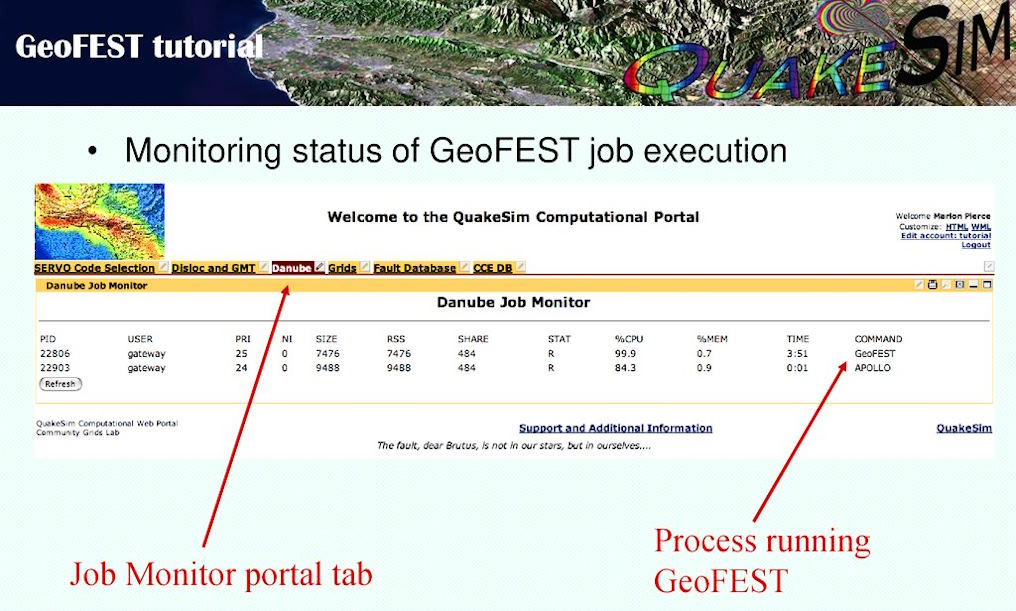
The GeoFEST is a two and three-dimensional finite element tool. It is designed for the modeling of solid stress and strain especially in geophysical and other continuing domain applications. Everyone with a specialization in the popular NASA QuakeSim project knows that GeoFEST is an important part of this project. It is targeted to compile and run on advanced UNIX systems. It also runs on different systems like sequential and message-passing parallel systems. The finite element basis sampling is used to obtain the solution to the elliptical partial differential equation. The spare linear system is mainly solved by the conjugate gradient iteration to a tolerance stage.
Enhancements in the geological research
The physical model supported in GeoFEST’s potential for geological research includes isotropic linear elasticity and Newtonian and power-law viscoelasticity. It contributes split-node faulting, surface tractions, and body forces along with the triangular, quadrilateral, tetrahedral, and hexahedral continuum elements. Different test cases are used to validate this tool and its associated mesh refinement methods. This is because of rigorous comparison to analytical solutions.
A box-shaped domain with imposed motion on one surface, 2 community-agreed benchmark cases, a couple of strike-slip faults in the complete stepover arrangement. The most popular technical applications of the code contain the modeling of the static and passing co-and post-seismic earth deformation, atmospheric and hydrological loading, earth response to glacial, and other scenarios including the bulk deformation of geological media.
Improved geological analysis gives remarkable benefits
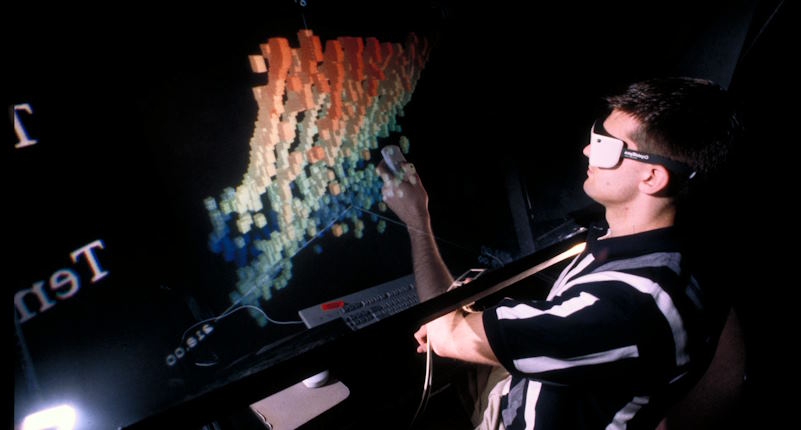
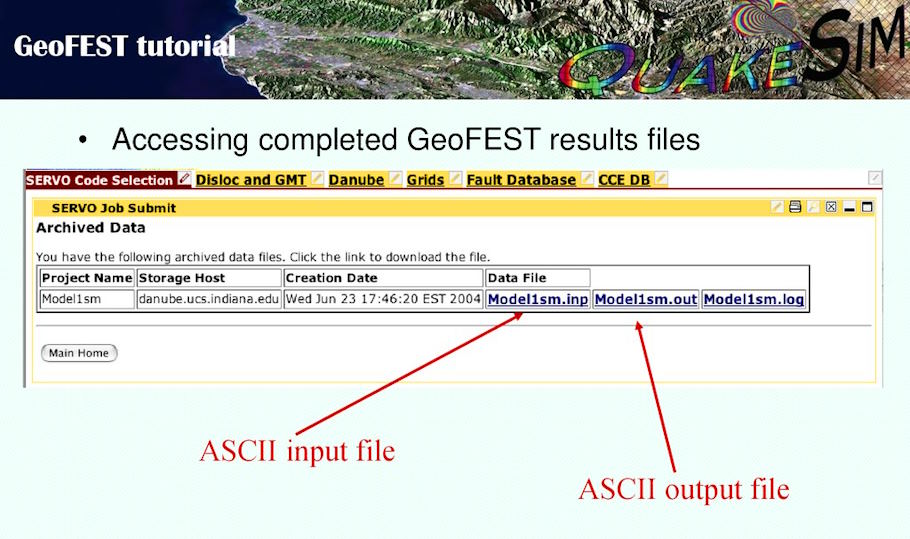
Reliable platforms in the geological analysis sector are dedicated to unveiling GeoFEST’s role in advancing geological understanding today. You have to know and remember that the GeoFEST can be properly used for simulating and producing the synthetic observable time-dependent surface deformation over long and short time scales. These simulations aid in the efficient integration of the InSAR, GPS, and other geodetic techniques requiring detailed analysis. This is because large volumes of data from the NASA remote sensing programs are properly developed and deployed.
Qualified and experienced geologists worldwide focus on effective methods for leveraging GeoFEST for enhanced geological analysis on time. The NASA Earth Science Technology Office computational technologies program is known for its funded extensions to this GeoFEST and supports large-scale simulations, scalability, and adaptive methods across different parallel computing systems. A good combination of hardware and software technologies is applied to make this transition and extra near-time development approaches for this GeoFEST.